
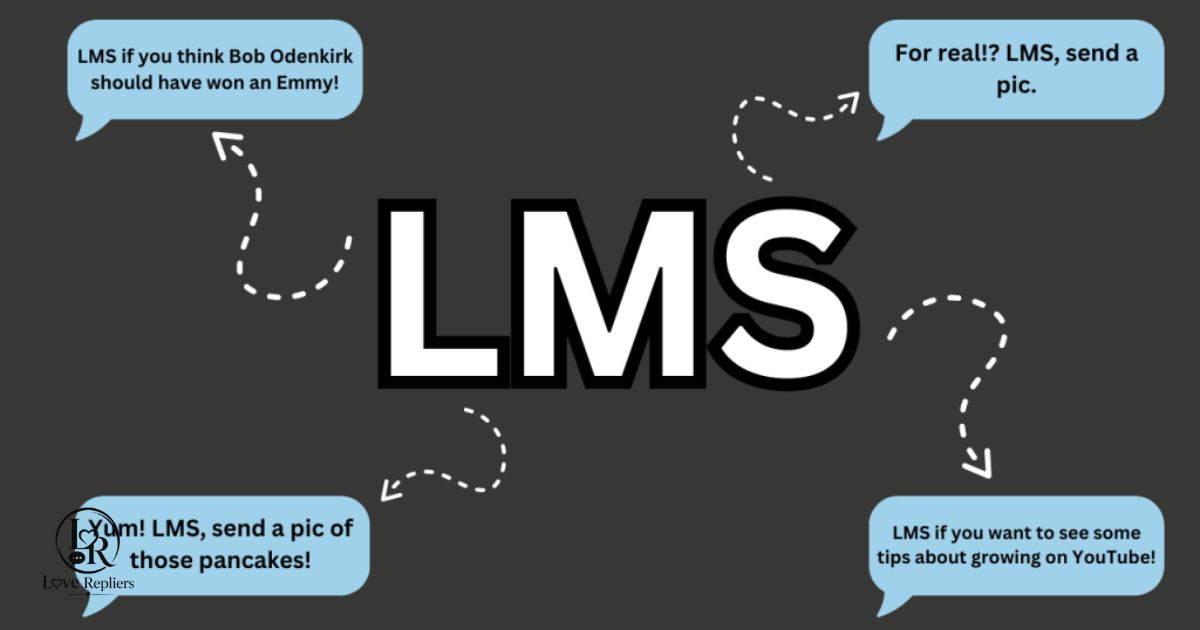
LMS in texting usually stands for “Like My Status”, a slang used on social media platforms like WhatsApp, Instagram, and Snapchat. It’s often used as a casual or playful request where someone asks others to engage with their post or status. Over time, LMS has also evolved into different informal meanings depending on context, but the most common interpretation in chatting remains related to social engagement and interaction.
In digital communication, LMS messages are commonly used in friendly, flirty, or attention-seeking ways such as “LMS if you miss me” or “LMS if you agree.” It helps users boost interaction, create fun engagement, and maintain visibility on their posts. Understanding LMS texting is important because slang evolves quickly, and its meaning can change based on platform, tone, or conversation style.
Overall, LMS texting reflects how modern communication is becoming more interactive and social-media driven. Whether used for fun, friendship, or engagement, it plays a role in increasing online connection and participation. However, it’s always important to use it in the right context so the message remains clear and meaningful.
Trending Today : 250+ Sexy Dirty Good Night Texts to Drive Him Wild
What Does LMS Mean in Texting
Core Definition and Most Common Meaning
- LMS commonly stands for “Like My Status” in texting and social media.
- It is used to ask others to like a post, photo, or status update.
- LMS is a form of informal online slang.
- It is mostly used on platforms like Facebook, Instagram, and WhatsApp.
- The term is popular among teens and young social media users.
- It is usually added in captions or status updates.
- LMS is meant to increase engagement on posts.
- It is not a formal abbreviation and is used casually.
- Its meaning depends on the context of the conversation.
- In most cases, it simply means requesting likes or interaction.
LMS Meaning in Everyday Chat Conversations
- In everyday chats, LMS is often used to mean “Like My Status.”
- It is a casual way of asking friends to engage with a post or message.
- People use it in friendly and informal conversations.
- It can appear in private chats or group discussions.
- LMS is often used jokingly to get attention or reactions.
- Friends may use it to increase interaction on social media content.
- It is a part of modern texting slang culture.
- The meaning can slightly change depending on context.
- It is mostly used among younger users.
- LMS helps keep online conversations active and engaging.
LMS Meaning on Social Media Platforms
- On social media, LMS usually means “Like My Status.”
- It is used to encourage people to like a post or update.
- Users add it in captions, stories, or comments for engagement.
- It is common on platforms like Facebook, Instagram, and Snapchat.
- LMS helps increase visibility of posts through interactions.
- Influencers may use it to boost engagement on their content.
- It is often used in a casual or playful tone.
- The term spreads quickly through viral posts and trends.
- It is part of modern social media slang culture.
- LMS is mainly focused on getting likes, reactions, or attention.
Why LMS Became Popular in Digital Communication
- LMS became popular because social media made engagement very important.
- It is short, simple, and easy to use in fast conversations.
- Users prefer quick slang instead of long sentences.
- It helps increase likes, comments, and visibility on posts.
- Teenagers and young users spread it widely across platforms.
- It fits well with the fast-paced nature of texting culture.
- Viral trends and memes helped popularize LMS.
- It became a quick way to request interaction online.
- Social media algorithms reward engagement, increasing its use.
- LMS remains popular because it is easy, catchy, and effective.
All Possible Meanings of LMS (Complete Breakdown)
Like My Status (Primary Slang Meaning)
- LMS commonly stands for “Like My Status” on social media.
- It is used to ask others to like a post or update.
- Mostly seen on Facebook, Instagram, and WhatsApp.
- It is used in informal and casual communication.
- Often included in captions or stories.
- Used to boost engagement on posts.
- Popular among teenagers and young users.
- Sometimes used in a playful or joking way.
- Encourages friends to interact with content.
- It is the most recognized slang meaning of LMS.
Let Me See Meaning in Conversations
- LMS can sometimes mean “Let Me See.”
- It is used when someone is thinking or checking something.
- Common in casual texting conversations.
- It can show hesitation or curiosity.
- Often used when responding to a question.
- Helps indicate someone is reviewing information.
- Used in both friendly and neutral tones.
- Context is important for this meaning.
- Can appear in quick chat replies.
- Less common than “Like My Status.”
Learning Management System (Formal Meaning)
- LMS stands for Learning Management System in education.
- It refers to software used for online learning platforms.
- Teachers use it to manage courses and students.
- Students access assignments and materials through it.
- Examples include Moodle and Google Classroom.
- It is widely used in schools and universities.
- Helps organize digital education content.
- Supports remote and hybrid learning systems.
- Tracks student progress and performance.
- This is the most formal and professional meaning of LMS.
Other Rare and Context-Based Meanings
- LMS can have different meanings in niche contexts.
- Sometimes used as shorthand in gaming or chat slang.
- It may represent custom meanings in specific groups.
- Some people use it as abbreviations for personal phrases.
- Rare meanings depend on community usage.
- It can be interpreted differently in different regions.
- Sometimes used in technical or business jargon.
- Not universally standardized outside main meanings.
- Always depends on context to interpret correctly.
- These meanings are uncommon but possible.
How Context Changes the Meaning of LMS
- The meaning of LMS depends entirely on the situation.
- Social media usually means “Like My Status.”
- Education systems use it as “Learning Management System.”
- Chat conversations may imply “Let Me See.”
- The surrounding words help determine the meaning.
- Platform type gives strong clues about interpretation.
- Tone of conversation also affects meaning.
- Same abbreviation can mean different things globally.
- Misunderstanding can happen without context awareness.
- Always analyze context before assuming the meaning.
The Psychology Behind LMS Usage
Social Validation and Attention-Seeking Behavior
- LMS is often used to gain likes and social approval.
- It reflects a desire for recognition from peers.
- People feel validated when others engage with their posts.
- It can boost self-esteem through online interaction.
- Users enjoy seeing quick responses and reactions.
- It creates a sense of being noticed or popular.
- Social approval motivates repeated use of LMS.
- It can encourage sharing more personal content.
- Likes act as a form of digital reassurance.
- It connects self-worth with online engagement.
Engagement Triggers and Curiosity Tactics
- LMS is used to spark curiosity among viewers.
- It encourages people to interact with a post.
- It creates a simple call-to-action.
- Users feel prompted to respond quickly.
- It increases chances of comments and likes.
- It works as a psychological trigger for engagement.
- Short commands make people more likely to react.
- It adds an interactive element to posts.
- It makes content feel more personal and direct.
- It leverages human curiosity for attention.
Peer Influence and Social Media Trends
- People use LMS because others in their circle do.
- Social media trends heavily influence its popularity.
- Friends encourage each other to use similar slang.
- Viral posts spread LMS usage quickly.
- Teenagers adopt it to fit in socially.
- It becomes part of online group identity.
- Influencers help normalize the term.
- It spreads through repeated exposure.
- Users copy language seen on popular platforms.
- Peer pressure plays a key role in adoption.
Emotional Intent Behind Using LMS
- LMS can express a desire for connection.
- It may show excitement or enthusiasm for interaction.
- Users want to feel noticed and appreciated.
- It can reflect playful or humorous intent.
- Sometimes it signals loneliness or need for attention.
- It helps users engage emotionally with others.
- It can be used to start conversations.
- It reflects a need for social belonging.
- Emotional satisfaction comes from responses.
- It strengthens digital relationships through interaction.
How LMS is Used Across Different Contexts
Text Messaging and Private Chats
- LMS is often used to mean “Like My Status.”
- Friends use it in casual one-on-one conversations.
- It can be used jokingly to ask for attention or likes.
- Sometimes it appears as a playful request in chats.
- It is used to boost engagement on shared posts.
- People may send it after uploading a status.
- It helps start light and informal interactions.
- Its tone is usually friendly and casual.
- Meaning depends on the context of the conversation.
- It is rarely used in formal private chats.
Instagram, Facebook, and TikTok Usage
- LMS is widely used as “Like My Status” on social platforms.
- It appears in captions and story posts.
- Users add it to increase engagement.
- It encourages likes, comments, and shares.
- Influencers sometimes use it to boost reach.
- It is commonly seen in trending posts.
- It helps content gain more visibility.
- It is often used in a playful tone.
- TikTok users may use it in video captions.
- It is part of social media engagement culture.
Group Chats and Online Communities
- LMS is used to encourage group interaction.
- Members may ask others to react or respond.
- It helps keep conversations active.
- It can be used humorously in group settings.
- It increases engagement within communities.
- People use it to get quick feedback.
- It may appear in gaming or fan groups.
- It creates a sense of participation.
- It is often used informally among members.
- Meaning depends on group culture.
Academic and Professional Environments
- In academics, LMS usually means Learning Management System.
- It refers to platforms like Moodle or Google Classroom.
- Teachers use it to share assignments and materials.
- Students submit work through LMS platforms.
- It helps manage online learning efficiently.
- In professional settings, it supports training programs.
- Companies use it for employee development.
- It tracks progress and performance.
- It is a structured digital learning tool.
- This meaning is formal and widely accepted.
How to Use LMS Correctly (Step-by-Step)
Basic Usage Structure in Sentences
- LMS is usually placed at the end of a sentence.
- It is used as a short call-to-action phrase.
- Example: “LMS if you agree.”
- It can be used in captions or comments.
- It should match the tone of the message.
- Keep sentences short and simple when using LMS.
- It is often combined with emojis in informal chats.
- It works best in casual communication.
- Avoid overusing it in one message.
- It should feel natural, not forced.
When to Use LMS in Conversations
- Use LMS in casual chats with friends.
- It is appropriate for social media posts.
- Use it when asking for likes or reactions.
- It works well in playful conversations.
- It can be used in group chats.
- Use it when tone is informal and friendly.
- It fits well in engaging captions.
- It is suitable for lighthearted messages.
- Use it when you want interaction.
- It should match the audience’s familiarity.
When Not to Use LMS
- Avoid LMS in formal conversations.
- Do not use it in professional emails.
- It is not suitable for academic writing.
- Avoid using it with people unfamiliar with slang.
- Do not use it in serious discussions.
- It may look unprofessional in work settings.
- Avoid overusing it in important messages.
- Do not use it where clarity is required.
- It should not appear in official documents.
- Use it only in appropriate informal contexts.
Tone, Timing, and Context Matching
- Always match LMS with a casual tone.
- Use it when the mood is light and friendly.
- Timing matters for engagement effectiveness.
- It works best during active social media hours.
- Avoid using it during serious moments.
- Match it with the relationship between users.
- Use it when interaction is expected.
- Ensure it fits the conversation flow.
- Don’t force it into unrelated topics.
- Proper context makes LMS more effective.
100+ Real Examples of LMS in Texting
Casual Everyday Examples
- LMS if you’re online 😄
- LMS if you’re bored
- LMS if you agree
- LMS if you miss school
- LMS if you’re free today
- LMS if you’re okay
- LMS if you saw this
- LMS if you’re awake
- LMS if you like this vibe
- LMS if you understand
Social Media Caption Examples
- Good vibes only ✨ LMS
- New post 😎 LMS if you like it
- Just me today 📸 LMS
- Feeling good 😄 LMS
- Weekend mood 💯 LMS
- New look 😏 LMS
- Simple life 🌿 LMS
- Smile always 😊 LMS
- Chill mode on 😌 LMS
- Drop a like 😍 LMS
Funny and Sarcastic LMS Examples
- LMS if you actually read this 😆
- LMS if you have no life like me 😂
- LMS if you’re pretending to be busy
- LMS if you’re ignoring responsibilities
- LMS if you survived today
- LMS if you’re tired like me
- LMS if you’re broke 💀
- LMS if you’re confused too
- LMS if you’re laughing for no reason
- LMS if you didn’t study
Flirty and Attractive LMS Examples
- LMS if I’m cute 😉
- LMS if you miss me
- LMS if you’re thinking about me 😏
- LMS if I’m your type
- LMS if you like my vibe
- LMS if I should text you
- LMS if you smiled at this
- LMS if you noticed me
- LMS if you can’t ignore me
- LMS if I’m on your mind
Short One-Line LMS Examples
- LMS now
- LMS please
- LMS if true
- LMS today
- LMS me
- LMS fast
- LMS guys
- LMS only
- LMS here
- LMS it
Group Chat Examples
- LMS if you’re in the group 😎
- LMS if you’re active
- LMS if you’re here
- LMS if you agree with this plan
- LMS if you’re coming
- LMS if you’re listening
- LMS if you’re still awake
- LMS if you saw admin message
- LMS if you’re free for meetup
- LMS if you’re alive 😂
Story and Status-Based Examples
- New status 😎 LMS
- My vibe today ✨ LMS
- Feeling this mood 😌 LMS
- Just posted 📸 LMS
- Story update 😏 LMS
- Late night thoughts 🌙 LMS
- Mood check 😄 LMS
- Random post 💭 LMS
- Life update 📍 LMS
- Daily vibe check 🌿 LMS
Question and Engagement-Based Examples
- LMS if yes or comment if no
- LMS if you agree or disagree?
- LMS if you want part 2
- LMS if you relate
- LMS if you understand this feeling
- LMS if you would do this
- LMS if true for you
- LMS if you’ve been here
- LMS if you think so
- LMS if you support this
Attention-Grabbing LMS Examples
- LMS if you’re paying attention 👀
- Don’t scroll without LMS
- LMS before you leave
- Only real ones LMS
- LMS or you’re fake 😆
- LMS if you’re still here
- LMS if you noticed this
- Stop scrolling—LMS
- LMS challenge 🔥
- Prove it—LMS
Reply-Based LMS Examples
- Reply LMS if you agree
- LMS and I’ll reply back
- LMS and I’ll text you
- LMS and I’ll tell you more
- LMS for part 2
- LMS if you want response
- LMS and I’ll follow you
- LMS and I’ll explain
- LMS and I’ll update you
- LMS and I’ll message you
Best Replies to LMS in Every Situation
Simple and Direct Replies
- Done 👍
- Liked ✔️
- Sure, liked it
- Already did 😊
- No problem
- Of course 👍
- Just did it
- Got it ✔️
- Done from my side
- Liked your post 👍
Funny and Witty Replies
- Only if you like mine too 😆
- LMS? I thought you said “Let’s Make Snacks” 😂
- Fine… but I expect a return like 😏
- I’ll like it after my coffee ☕
- You owe me one now 😄
- Liked it… now I’m famous?
- I charge per like 💀
- Done, but I’m judging the post 😆
- I liked it emotionally and digitally 😂
- You’re lucky I was online
Flirty and Playful Replies
- Only for you 😉
- I liked it… now notice me 😏
- Anything for you 😌
- You owe me a smile now
- I liked it… don’t miss me too much
- I’ll like it if you text me 😄
- Done… now think of me
- You’re getting special treatment 😉
- I liked it… happy now?
- I hope you noticed me doing it 😏
Smart and Thoughtful Replies
- Liked it, nice post 👍
- Good engagement idea
- Interesting update, done ✔️
- I see what you’re doing 😄 liked it
- That’s a creative post
- Makes sense, liked it
- Done, keep posting like this
- Nice way to engage people
- Liked and appreciated 👍
- Good content, liked it
Polite and Professional Replies
- Sure, I’ve liked it
- Done as requested
- Liked your post
- Thank you for sharing
- I’ve supported your update
- Consider it done
- Liked 👍
- Completed the action
- Appreciate the update
- Done respectfully
When and How to Ignore LMS
- Ignore if it comes from strangers repeatedly
- Skip if it feels spammy or forced
- Don’t respond if it’s irrelevant or annoying
- Ignore in professional or formal chats
- Avoid engaging if it’s attention-seeking spam
- Don’t reply if you’re uncomfortable
- Skip if it disrupts serious conversation
- Ignore repeated LMS requests from same person
- No need to respond if you already liked
- Focus only on meaningful interactions instead
LMS vs Similar Slang Terms (Clear Comparison)
LMS vs DM (Direct Message)
- LMS means “Like My Status,” while DM means “Direct Message.”
- LMS is used for public engagement on posts.
- DM is used for private one-on-one conversations.
- LMS focuses on likes and reactions.
- DM focuses on private communication.
- LMS is visible to everyone, DM is hidden.
- LMS is informal social media slang.
- DM is a messaging feature on platforms.
- LMS asks for interaction, DM starts a chat.
- Both are used in completely different contexts.
LMS vs PM (Private Message)
- LMS requests likes; PM means “Private Message.”
- LMS is public, PM is private communication.
- PM is similar to DM but used on older platforms.
- LMS is for engagement on posts or statuses.
- PM is for direct personal messaging.
- LMS is social media slang; PM is messaging terminology.
- PM is often used in Facebook or forums.
- LMS is about reactions, PM is about conversation.
- LMS is visible to audience, PM is confidential.
- Both serve very different communication purposes.
LMS vs Like & Share Trends
- LMS focuses only on likes, not shares.
- Like & Share trends encourage wider content reach.
- LMS is a short engagement request.
- Like & Share involves more interaction actions.
- LMS is often used in captions or statuses.
- Like & Share is used in promotional content.
- LMS is informal slang, Like & Share is marketing-driven.
- Like & Share aims for viral reach.
- LMS is simpler and less structured.
- Both aim to increase engagement but in different ways.
LMS vs Other Popular Acronyms
- LMS means “Like My Status,” while LOL means “Laugh Out Loud.”
- LMS is engagement-focused; BRB is action-based (“Be Right Back”).
- LMS is social media-specific slang.
- OMG expresses emotion, LMS requests interaction.
- IDK means “I Don’t Know,” unrelated to engagement.
- LMS is used for posts; other acronyms are conversational.
- TTYL means “Talk To You Later,” LMS is not conversational.
- LMS is platform-driven, others are general texting slang.
- Each acronym serves a different communication purpose.
- LMS is unique because it directly asks for social interaction.
Common Mistakes and Misinterpretations
Misunderstanding the Meaning of LMS
- Many people think LMS has only one fixed meaning.
- Some confuse it with unrelated technical terms.
- Users may not know it means “Like My Status.”
- It can be misread depending on context.
- Some assume it is a formal abbreviation.
- New users often misunderstand its purpose.
- It is sometimes mistaken for professional jargon.
- Meaning changes across platforms causes confusion.
- People may overthink simple usage.
- Lack of awareness leads to incorrect interpretation.
Using LMS in the Wrong Context
- LMS is often wrongly used in formal emails.
- It does not fit professional communication.
- Some use it in academic writing incorrectly.
- It is inappropriate in serious discussions.
- Wrong tone makes messages look unprofessional.
- It should not be used with unfamiliar audiences.
- Misuse can confuse the reader.
- It is best for casual conversations only.
- Some use it where clarity is required.
- Context mismatch reduces message effectiveness.
Confusing LMS with Technical Terms
- LMS is also known as “Learning Management System.”
- People confuse slang LMS with educational LMS.
- This leads to misunderstanding in academic contexts.
- Technical LMS is used in online learning platforms.
- Social LMS is completely unrelated to education.
- Confusion happens due to same abbreviation.
- Context is essential for correct meaning.
- Professionals rarely confuse the two meanings.
- Students may mix up both interpretations.
- Awareness helps avoid miscommunication.
Overuse and Spam-Like Behavior
- Repeated LMS messages can look spammy.
- Overuse reduces engagement quality.
- It may annoy followers or friends.
- Too many LMS posts feel forced.
- It can lower content credibility.
- Users may ignore repetitive requests.
- Overuse weakens the impact of posts.
- It should be used sparingly.
- Balance is important for engagement.
- Natural usage is more effective than repetition.
Is LMS Still Relevant in 2026
- LMS is still recognizable in 2026 but used less frequently than before.
- It remains relevant in older social media platforms like Facebook.
- Younger users prefer newer slang and reaction-based engagement tools.
- LMS is now more of a niche or casual slang term.
- It is still understood by most internet users.
- Its usage has declined due to evolving social media trends.
- It survives mainly in informal or humorous contexts.
- New platforms rely less on text-based engagement requests.
- LMS is now considered slightly outdated slang.
- It still exists but is not a trending term anymore.
Current Trends in Text Slang
- Short video platforms dominate modern slang creation.
- Emojis and stickers are replacing many text abbreviations.
- AI-generated replies are changing communication styles.
- Slang now spreads faster through viral content.
- Users prefer visual expressions over typed slang.
- Engagement is often automatic rather than requested.
- New slang evolves very quickly and fades fast.
- Gen Z slang dominates current online communication.
- Context-based expressions are more common than acronyms.
- LMS is part of older slang trends.
Platform-Based Popularity Insights
- LMS is most common on Facebook-style platforms.
- WhatsApp groups still use it occasionally.
- Instagram and TikTok rarely rely on LMS today.
- Engagement is now algorithm-driven on most platforms.
- Older users are more likely to use LMS.
- Younger users prefer trending short-form slang.
- Social media posts rely less on text commands.
- LMS is still seen in group chats sometimes.
- It is less visible in modern content feeds.
- Platform evolution has reduced its popularity.
Future of LMS in Digital Communication
- LMS will likely continue fading in popularity.
- It may survive as nostalgic internet slang.
- It could still be used in casual friend groups.
- New engagement tools will replace it over time.
- Emoji-based reactions are becoming dominant.
- AI interaction may reduce need for such slang.
- LMS may appear in memes or jokes.
- It will not be a mainstream term in future.
- Digital communication is becoming more visual.
- LMS will remain part of internet history but limited in use.
Expert Tips to Use LMS Effectively
How to Sound Natural and Engaging
- Use LMS only in casual conversations or posts.
- Keep your sentence simple and clear.
- Add LMS at the end of a natural message.
- Match your tone with your audience’s style.
- Avoid repeating it in every post.
- Combine it with light humor or emojis.
- Use it where engagement already feels likely.
- Don’t force it into serious content.
- Make it part of your natural expression.
- Keep it friendly and conversational.
How to Increase Engagement Using LMS
- Pair LMS with interesting or relatable content.
- Post at times when your audience is active.
- Use LMS in short, catchy captions.
- Add a question to encourage responses.
- Combine LMS with trending topics.
- Keep posts visually appealing.
- Use it in group chats for quick interaction.
- Encourage friends to respond quickly.
- Don’t overuse it to avoid spam feeling.
- Stay consistent but not repetitive.
When to Replace LMS with Better Alternatives
- Replace LMS in formal or professional settings.
- Use full sentences instead of slang in important messages.
- Avoid LMS when clarity is more important.
- Use “please like this post” in professional tone.
- Replace it with emojis for modern engagement.
- Use platform-native reactions instead.
- Avoid LMS in academic or work communication.
- Use clearer CTAs for business content.
- Replace it in serious discussions.
- Choose more modern engagement tools when needed.
Alternatives to LMS (Modern & Effective)
Casual Slang Alternatives
- Like this 😄
- Tap like 👍
- Drop a like ❤️
- Show some love 💕
- Hit the like button 😏
- Double tap if you agree
- React if you relate
- Like if true
- Agree? 👍
- Vibe check—like it
Professional Alternatives
- Please like this post if you found it helpful.
- Your feedback through likes is appreciated.
- Kindly support by liking this update.
- Engage with this post if it resonates with you.
- Your interaction is appreciated.
- Please react if you agree with this content.
- Support this post with your feedback.
- Feel free to like and share your thoughts.
- Engagement is welcome and appreciated.
- Please support this content if useful.
Creative and Unique Alternatives
- Light it up with a like ✨
- Fuel this post with a reaction 🔥
- Send a heart if you feel it ❤️
- Tap if this hits different 😌
- Make this post glow with love 🌟
- Press like to unlock good vibes
- Let this post know you exist 😄
- Show some digital love 💫
- Add your spark with a like ⚡
- Turn this post into a vibe 💥
Conclusion
LMS may have started as a popular social media slang term, but its usage has evolved over time with changing digital trends. While it is still understood and used in casual conversations, modern platforms now favor more natural expressions, emojis, and interactive features for engagement. Knowing when and how to use LMS—or when to replace it with better alternatives—helps you communicate more effectively and stay relevant in today’s fast-moving online world.
FAQs
1. What does LMS mean in texting?
LMS usually means “Like My Status,” a slang term used on social media to ask people to like or engage with a post or update.
2. Is LMS still used in 2026?
Yes, but less commonly than before. It is still used in casual chats and older social media platforms, but newer slang and engagement tools are more popular.
3. Can LMS be used in professional communication?
No, LMS is informal slang and should be avoided in professional emails, academic writing, or formal conversations.
4. What is the difference between LMS and DM?
LMS is used for public engagement on posts, while DM (Direct Message) is used for private conversations between users.
5. What are better alternatives to LMS?
Modern alternatives include “like this,” “drop a like,” emojis, or platform reactions like hearts, thumbs up, and shares, which feel more natural and engaging.

Smith is a content writer and relationship-focused blogger at LoveRepliers.com, where he shares thoughtful insights on love, communication, and modern relationship advice. His writing style is simple, engaging, and aimed at helping readers express their feelings more clearly and confidently in everyday life.
He specializes in crafting heartfelt messages, reply ideas, and emotional expression guides that make it easier for people to communicate in meaningful ways. Through his work, Smith aims to make online communication more personal, relatable, and impactful.
When he’s not writing, Smith enjoys exploring creative storytelling ideas and studying how language influences emotions and relationships.